Letter Frequency Counter
See how often each letter from A to Z appears in your text, with counts and percentages, plus total and unique letters. No signup, any device.
Result
Letter frequency (A–Z)
| Letter | Count | % |
|---|
Share on Social Media:
This letter frequency counter shows how often each letter appears in your text as you type, with a count and percentage for every letter from A to Z, directly in your browser. Paste or write your text and the table updates live. No account, no install, so you can analyse letters on any device in seconds.
How to Count Letter Frequency Step by Step
- Paste or type your text. Drop your text into the input box, or type directly. The frequency table begins building from the first letter.
- Read the frequency table. A table lists each letter that appears, with how many times it occurs and what percentage of all letters it makes up, sorted from most to least frequent.
- Check total and unique letters. Cards show the total number of letters and how many different letters appear, giving context for the frequencies.
- Edit and watch it update. Add or remove text and the frequency table updates instantly, so the counts and percentages always match your current text.
- Use the frequencies for your task. Whether for analysis, puzzles or study, read the per-letter counts and percentages directly, with no button to press.
What Letter Frequency Counting Shows and How
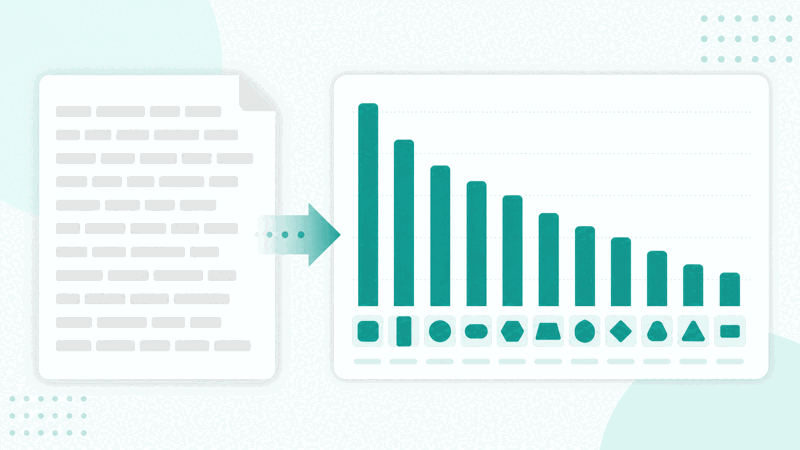
A letter frequency counter shows how often each letter of the alphabet appears in a piece of text. It goes through your text, tallies each letter from A to Z, and presents the results as a table with a count and a percentage for every letter that appears, sorted from most to least common.
The percentage for each letter is its share of all the letters in the text, so the percentages add up across the alphabet. Alongside the table, cards show the total number of letters and how many different letters appear, giving context for how the frequencies are spread.
Letter frequency is a classic feature of language: in typical English, letters like E, T and A appear far more often than J, Q or Z. Analysing frequency reveals these patterns in your own text, which is useful for language study, puzzles, ciphers and simple text analysis.
Everything runs in your browser, so your text is never uploaded. The table appears instantly and privately, with nothing leaving your device. The tool works the same on a phone, tablet or computer, with no account and no limit on how much text you can analyse.
Letters Versus Characters and Words
| Column | What it shows | How it is worked out |
|---|---|---|
| Letter | Each letter that appears | A to Z, case-insensitive |
| Count | How many times it occurs | Tally of that letter |
| Percent | Its share of all letters | Count divided by total letters |
| Total / unique | All letters and distinct letters | Context for the table |
Who Uses a Letter Frequency Counter

Pro Tips for Reading Letter Frequency
Common Letter Frequency Mistakes to Avoid
Related Tools You May Need Next
For more analysis, our Character Counter counts characters, the Consonant Counter splits letters into consonants and vowels, and the Word Counter gives word statistics.

Frequently Asked Questions
How do I count letter frequency?
Paste or type your text into the input box and a table appears instantly, listing each letter with how many times it occurs and what percentage of all letters it makes up, sorted from most to least frequent. Cards also show the total and unique letter counts. Everything updates live as you edit, so you can analyse the letter frequency of any text without counting by hand.
What does the percentage mean?
Each letter's percentage is its share of all the letters in your text: its count divided by the total number of letters. So if E makes up twelve percent, twelve out of every hundred letters are E. Percentages let you compare letter frequency fairly between texts of different lengths, since they account for how many letters the text has in total.
Are spaces and numbers counted?
No. The tool counts only alphabet letters and ignores spaces, numbers and punctuation, so those do not appear in the frequency table. Upper and lower case are treated as the same letter, so A and a are counted together. This gives a clean view of just the letters, which is what letter frequency analysis is about.
Why is letter frequency useful?
Letter frequency reveals patterns in language and text. In typical English, some letters like E and T are far more common than others like Q or Z. Analysing frequency helps with language study, solving cryptograms and codes, checking constrained writing, and simple text analysis. Seeing the counts and percentages for your own text makes these patterns concrete and easy to explore.
Can I use it to solve cryptograms?
Yes. Letter frequency is a classic code-breaking aid. In a simple substitution cipher, the most frequent cipher letters often stand for the most frequent plain letters, such as E and T in English. The frequency table gives you the ranking of letters in the cipher text, which you can match against typical English frequencies to start working out the substitution.
Is my text uploaded anywhere?
No. The analysis happens entirely in your browser, so your text is never sent to a server. This makes the tool fast and private: the frequency table appears the instant you type, and nothing you write leaves your device. You can paste any text and analyse its letter frequency knowing it stays on your own device.
Can I use it on my phone?
Yes. The tool runs in your browser and works the same on a phone, tablet or computer, with no app to install. Paste or type your text and the letter frequency table appears instantly. Because everything runs on your device, it is just as fast and private on mobile as on a desktop, so you can analyse letters anywhere.
Is the letter frequency counter free?
Yes, it is completely free with no account and no limit. You can analyse as much text as you like, on any device, at no cost. The tool runs in your browser, so there is nothing to download or install, and the frequency table with counts and percentages appears instantly as you type. Use it whenever you need to see how often each letter appears in a text.